
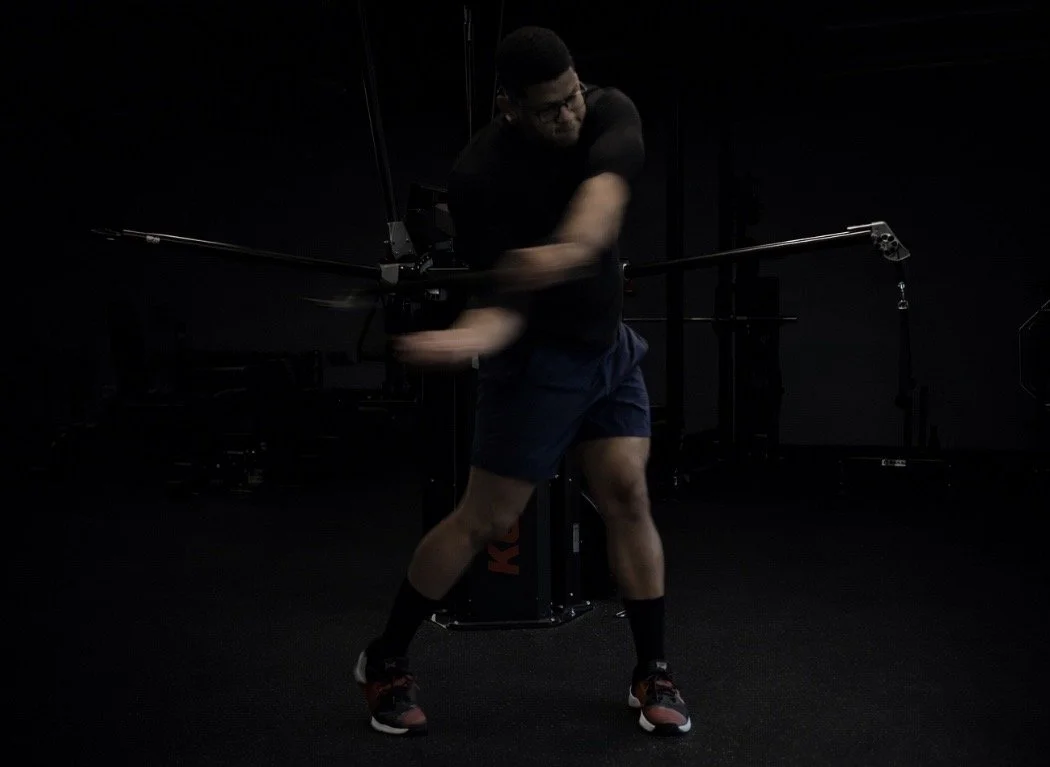
By Steve Evans Jr., BS, CSCS, USAW L2, TPI L2
Regional Director of Fitness | Competitive Olympic Weightlifter | Author of The Power Playbook | Creator of Evans Velo Zone®
When most people think about improving strength and athletic performance, they focus on familiar measurements: how much weight they can lift, how many repetitions they complete, or how much their numbers improve over time.
While these measurements matter, they don’t always tell the complete story.
Two individuals may lift the same weight but move it at considerably different speeds. Even the same individual may perform differently from one training session to another.
Velocity-based training (VBT) provides additional insight by measuring how quickly a load moves during resistance training. When appropriately applied, this feedback helps coaches evaluate performance, monitor fatigue, and individualize training.
However, measuring performance is only half the equation. The greater challenge is understanding what those measurements mean and how they should influence the next training decision.
What Is Velocity-Based Training?
VBT uses movement speed to monitor and guide resistance training.
Traditional strength programs often prescribe intensity using percentages of an individual’s one-repetition maximum (1RM). Although effective, this approach doesn’t always account for daily changes in readiness or performance.
For example, an athlete performing a squat with 135 pounds may move that weight faster on one training day than another. When exercise conditions, technique, and effort are comparable, these differences can provide useful information about their current capabilities.
Coaches can use this feedback to adjust resistance, manage training volume, or modify recovery periods.
Movement velocity is particularly useful when developing power, which reflects how quickly work can be performed. This matters for activities such as golf, tennis, Olympic weightlifting, and other sports requiring explosive movement.
The goal isn’t to replace traditional strength-training principles, but to make their application more individualized.
Why Consistency Matters as Much as Peak Performance
One of VBT’s practical applications is monitoring performance changes during a workout.
As fatigue accumulates, movement speed may decline. Depending on the session’s objective, a coach might adjust the load, extend recovery, or conclude an exercise to preserve the intended training quality.
However, an athlete’s fastest repetition doesn’t necessarily reveal their full performance capabilities.
Consider two athletes performing the same explosive exercise. One produces an exceptional initial repetition but experiences a substantial decline as demands increase. The other produces a slightly lower peak but maintains more consistent output.
Both demonstrate valuable qualities, but their performance characteristics are different.
These observations raise important questions:
Can performance be maintained across repeated efforts?
How does output change as resistance or fatigue increases?
Can previously demonstrated performance be regained?
Are improvements sustained across multiple training sessions?
Understanding these differences helps coaches move beyond isolated measurements and make more informed developmental decisions.
Applying These Principles in Olympic Weightlifting
For strength and performance coach Steve Evans Jr., these principles extend beyond coaching others into his own competitive athletic development.
Competing in the 110 kg Olympic weightlifting class, Evans recorded competition bests of 118 kg in the snatch and 140 kg in the clean and jerk, totaling 258 kg with six successful attempts at a March 2026 competition.
His training emphasizes developing strength and power while managing fatigue, maintaining technical quality, and improving the repeatability of successful lifts at challenging intensities.
Rather than evaluating progress exclusively through maximal attempts, he also considers how consistently high-quality performance can be reproduced throughout a training cycle.
This reinforces an important principle: A physical quality becomes more valuable when it can be consistently expressed under the demands that matter.
From Training Measurements to Better Decisions
Modern performance technology provides numerous ways to evaluate strength, power, movement velocity, and fatigue.
Yet collecting more data doesn’t automatically produce better training decisions.
A reduction in movement speed might indicate temporary fatigue, changes in technique, or another performance limitation. Determining the appropriate response requires interpretation within the context of the individual’s training history and objectives.
This emphasis on purposeful development has shaped Evans’ evolving coaching philosophy.
His book, The Power Playbook, represents an earlier foundation of his approach to structured strength and power development, emphasizing measurable performance, training intent, and purposeful progression.
Those foundational principles subsequently contributed to the development of Evans Velo Zone® (EVZ), an independently developed methodology focused on the retention, transfer, re-attainment, and expression of physical qualities.
While conventional VBT offers valuable performance measurements and monitoring tools, EVZ introduces a structured developmental framework intended to help practitioners interpret performance changes and guide subsequent programming decisions.
The objective isn’t to replace existing training measurements, but to make the information more actionable.
The value of performance data isn’t simply what it measures, but how effectively it informs the next training decision.
Translating Training Into Real-World Results
These principles are also reflected in the experiences of athletes working with Evans.
One club golf professional in the Mid-Atlantic region reported increasing average clubhead speed from 113 mph to 117 mph, with maximum speed improving from 118 mph to 124 mph. The athlete also reported approximately 10–12 additional yards of driving distance and a top-10 finish in Player of the Year points for the first time in several seasons.
The golfer emphasized that training was adjusted according to individual responses, with progression focused on developing performance that could be consistently expressed rather than simply increasing resistance.
Another amateur golfer reported gaining nearly 10 mph of driver speed during a single off-season while following the training system outlined in The Power Playbook.
While individual outcomes vary, these client-reported results illustrate how structured strength and power development can support meaningful athletic improvement.
Building Performance That Lasts
Although VBT is often associated with competitive athletes, its underlying principles can benefit recreational lifters, golfers, older adults, and individuals seeking greater strength and physical capability.
Not every client requires specialized monitoring equipment. Effective coaching also involves observing movement quality, evaluating effort, tracking progress, and making appropriate adjustments as individuals develop.
Ultimately, technology is most valuable when it complements sound coaching rather than replacing it.
Effective training isn’t simply about achieving better numbers during a single workout. It’s about developing physical capabilities that can be maintained, reproduced, and expressed when they matter most.
For individuals seeking to improve strength, power, or athletic performance, working with an experienced fitness professional can help translate these principles into purposeful, individualized training.
About the Author
Steve Evans Jr., BS, CSCS, USAW L2, TPI L2 is a Regional Director of Fitness, competitive Olympic weightlifter, and strength and performance coach specializing in individualized strength, power, and athletic development.
He is the author of The Power Playbook and creator of Evans Velo Zone®, an independently developed performance methodology and practitioner education platform.
Further reading: The Power Playbook by Steve Evans Jr. | www.evansvelozone.com